Xiaomi Smart Band 9 or Smart Band 8: worth upgrading?
Updated on August 13, 2026
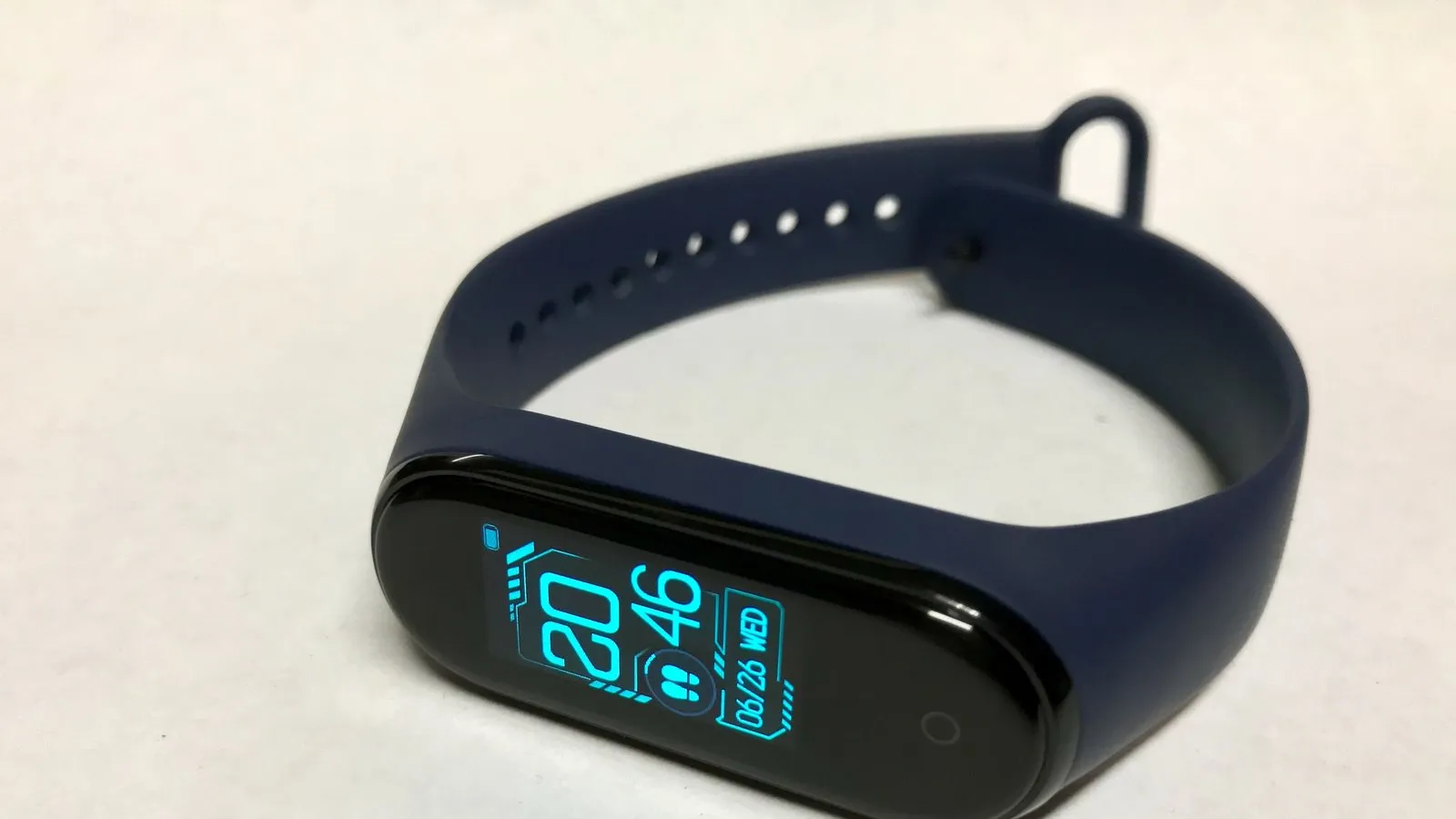
Xiaomi ships a new fitness band every year, and anyone who already owns one asks the same question: what actually changed, and is it worth paying more for the current model? Between the Smart Band 9 and the Smart Band 8, the honest answer is narrower than the marketing suggests.
What actually changed
Both use the same 1.62-inch AMOLED screen, the same pill-shaped module, and the same processor. The real differences come down to three things:
- Screen brightness: the Smart Band 9 peaks at 1,200 nits versus a dimmer max on the Smart Band 8. In practice this only matters on a bright sunny day, when the older screen gets hard to read.
- Heart-rate sensor: Xiaomi redesigned the PPG sensor for generation 9, with steadier readings during running and high-intensity training. At rest the difference is small.
- Battery: the Smart Band 9 stretches to 21 days versus 16 on the Smart Band 8. Both numbers are already high enough that most people won’t notice a difference week to week.
What didn’t change is the core: step counting, sleep tracking, phone notifications, and 150+ sport modes are on both generations, with the same accuracy for non-competitive use.
What the global version leaves out
This is the part a generation-versus-generation comparison tends to hide, because it applies equally to both. Xiaomi sells different versions by region, and the global one, which is what most of the world buys, leaves the factory without three things the Chinese variant has.
The first is GPS. Neither band has its own receiver. What they have is connected GPS: the band borrows the phone’s signal to draw the route, which means leaving the house with the phone in a pocket or an armband. If you run and want to leave the phone behind, neither one solves it, and the answer inside the same family is the Smart Band 9 Pro, which adds built-in GPS along with a bigger screen.
The second is NFC and contactless payments. The global version does no payments and no transit cards. A listing promising those is usually selling the Chinese unit, which arrives with a Chinese system and services tied to China.
The third is the microphone. The Chinese NFC variant has a mic and speaker, which is how it offers a voice assistant and call answering. The global unit does not carry those parts: notifications arrive to be read, and a call can only be rejected or answered with a canned message.
The box number against real use
The 21 days on the Smart Band 9 and 16 on the Smart Band 8 are measured in a conservative mode: no continuous heart-rate sampling, no overnight SpO2 monitoring, no always-on display and few notifications. Turn on the continuous tracking that is the reason to buy a band in the first place, and reviewers land near a week. That is still a lot, and still far beyond any smartwatch, but the honest comparison between the two generations is a week against a week, not 21 days against 16.
The sensor claim deserves the same reading. Xiaomi quotes roughly 16% more accuracy on the Smart Band 9, which is a percentage gain on a reading that is already an optical estimate at the wrist. At rest, the two agree. During interval work, where the wrist swings and the skin is wet, the gap opens up, and that is where the newer sensor earns the choice.
A practical note for anyone who already owns accessories: Band 8 and Band 9 straps are interchangeable, because both use the same quick-release system. The people who lose their collection are those coming from a Mi Band 4, 5, 6 or 7, since the Band 8 changed the module shape.
When the upgrade is worth it
If you already own a working Smart Band 8, the math rarely favors trading up. The real gain is for someone buying their first band today and deciding between paying more for the current model or saving on the outgoing one, which is still in stock at most retailers.
Prices swing with sales and color choice. Check the current price on Amazon before deciding.
Upgrade when:
- You run or cycle regularly and notice the Smart Band 8’s heart-rate sensor drifting during effort.
- You wear it outdoors a lot and the older screen already gets hard to read in direct sun.
- The price gap on a current sale is small enough that it doesn’t really matter.
Skip it when you only use the band to count steps, check notifications, and track sleep: in that case the $10–$15 difference buys more value somewhere else.
Quick comparison
| Model | Best for | Price range |
|---|---|---|
| Xiaomi Smart Band 9 | Frequent training or heavy outdoor use | $35 – $50 |
| Xiaomi Smart Band 8 | The basics at the lowest price | $25 – $35 |
If what you actually want is more than steps and sleep, a bigger screen and built-in GPS change the category entirely, and it’s worth checking our budget smartwatch picks before deciding. If wearing something on your wrist to sleep is the annoyance, there’s another option: is a smart ring worth trading your smartwatch for covers where the ring wins and where it loses to a band. And if you run often and want real built-in GPS, that’s a different device: what actually changes accuracy on a GPS running watch.
Our recommendations
Xiaomi Smart Band 9
The current generation: a brighter screen, a redesigned heart-rate sensor, and the longest battery life in the line.
Pros
- Up to 21 days of battery on a single charge
- AMOLED screen hits 1,200 nits, readable in direct sunlight
- Redesigned PPG sensor: steadier heart-rate and SpO2 readings
Cons
- Same processor and OS as the previous generation, the upgrade is sensor and screen only
- On-screen mini-games are more novelty than something you'll actually use
- No built-in GPS on the global version, so a run route depends on carrying your phone
- No NFC payments outside China, and the global unit also drops the microphone the Chinese variant has
- The 21-day figure assumes features off; with continuous tracking on, reviewers see about a week
$35 – $50
Check price on AmazonXiaomi Smart Band 8
The previous generation, now cheaper: it tracks the same basics, with the real gap showing up only in sensor accuracy.
Pros
- Often close to half the price of the Smart Band 9 during sales
- Same 1.62-inch AMOLED screen, just dimmer at peak brightness
- Up to 16 days of battery, still plenty for most people
Cons
- Heart-rate sensor is less accurate during intense workouts
- Being phased out, so color options get harder to find over time
- 600 nits, half the Smart Band 9's peak brightness, and that is the gap you see outdoors
- Global version has no GPS and no NFC either, so the limitation is identical to the newer band
$25 – $35
Check price on AmazonPrices are reference ranges and change often, so check the current price on Amazon before buying.
Frequently asked questions
Is it worth upgrading from the Smart Band 8 to the Smart Band 9?
Only if you already notice the screen washing out in sunlight or the heart-rate sensor drifting during hard workouts. If you mainly use it to count steps and check notifications, both generations deliver the same day-to-day experience, and the price difference is better spent elsewhere.
Why do some listings call it Mi Band and others Smart Band?
It's a rebrand, not a different product. Xiaomi standardized the international name to Smart Band starting with this generation, but older listings and reviews still use Mi Band because that was the name for years before. You'll see both names attached to the same device, especially around the Smart Band 8 generation.
Does the Smart Band 8 strap fit the Smart Band 9?
It does. Both generations use the same quick-release system, and Xiaomi's own official straps list Smart Band 8 and Smart Band 9 as compatible models. The break came earlier: straps for the Mi Band 4 to 7 fit neither, because the Band 8 redesigned the module. The exception is generation-specific accessories, such as the Band 9 running clip, which Xiaomi says should not be used on the Band 8.