The Best Portable Bluetooth Speakers in 2026
Updated on August 13, 2026
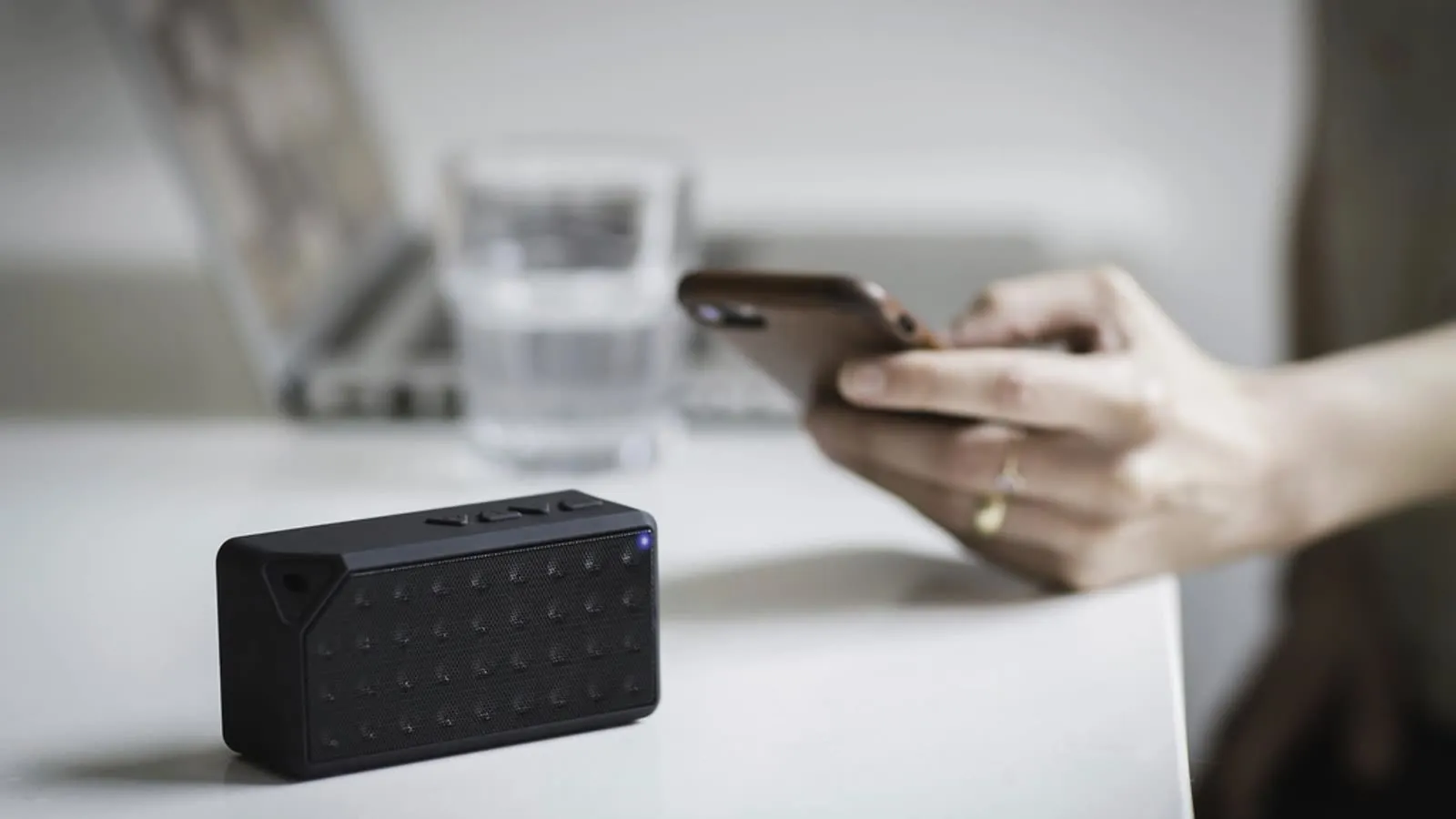
Portable speakers are a category where size decides nearly everything: output, battery and bass all follow from cabinet volume. The right pick depends less on brand than on where the speaker will actually play.
Three decisions before you choose
- Where will you use it? A kitchen or a desk needs something small. A backyard or a beach needs real output and water resistance.
- How much battery do you need? A day at the beach eats eight hours easily. A 20-hour model means leaving the charger behind.
- Will it get wet? If the answer is “maybe”, buy IP67 now. The price difference is smaller than replacing the speaker later.
Speaker prices swing a lot between generations and sales, so check the current price for the specific model before buying.
A new generation isn’t automatically the right buy
JBL replaced both of its best-selling portables in 2026: the Flip 6 became the Flip 7 and the Go 4 became the Go 5. Both older generations are still on sale and cheaper, which is where the decision gets interesting.
On the Flip, the jump is real. The 7 moves from IP67 to IP68, which adds drop resistance, goes from 12 to as much as 16 hours of battery, and swaps PartyBoost for Auracast, which pairs with any compatible JBL speaker instead of demanding an identical one. If your speaker goes to the beach and on hikes, that justifies the gap. If it lives on a kitchen counter, it doesn’t: a discounted Flip 6 sounds nearly the same for a lot less.
On the Go, the jump is much smaller. The Go 5 added Auracast and a new look, but sound is limited by size on both, and the Go 4 costs less. Here the older generation is the smarter buy, and it’s the one that stays on the list below.
What owners and reviewers actually report
Watt ratings tell you nothing useful about a portable speaker, because the interesting part is how each one behaves at the top of its volume range. That is where reviews from people living with these speakers earn their keep.
With the Flip 7, the two surprises for buyers are both omissions: there is no aux input and no microphone, so no speakerphone and no voice assistant. On battery, the 16-hour claim comes with a condition that reviewers keep flagging: it applies with Playtime Boost enabled, and that mode buys the extra hours by pulling back the bass and pushing the tuning toward mids and treble. Reviewers who like bass describe the result as podcast-shaped and switch it off, which puts real runtime back near the Flip 6’s territory. Push the volume to maximum and distortion shows up too, so a fair amount of coverage ends with the reviewer reaching for the app EQ. The heavy side-to-side vibration that startles new owners is just the passive radiators doing their job.
The Go 4’s recurring criticism is compression. Reviewers who measure it are blunt that the sound collapses in the top portion of the range, with audible hiss and cabinet rumble, and the practical advice is to keep it short of maximum. A detail that rarely makes product pages: the angle the speaker sits at noticeably changes the bass. The JBL Portable app has a five-band EQ, and lifting the 64 Hz and 250 Hz sliders recovers some body at the cost of playtime. None of this has dented buyer sentiment, with the speaker holding a 4.8-star average across more than 13,000 Amazon reviews, which is what a known trade-off looks like rather than a hidden flaw. Owners who have heard both generations also tend to say the Go 4 has more bass than the newer Go 5.
The Motion Boom’s honest weakness is balance rather than volume. Independent measurements put its low bass short of what a cabinet that size implies, and reviewers describe the mids as recessed once it is loud, which is the technical version of the muddiness complaint. The floating trick is the part that disappoints in practice: it does float, but it tips forward and turns the drivers toward the water, so it works as insurance against a speaker sinking rather than as a pool feature. The built-in handle, meanwhile, is close to universally praised as the thing that makes the size tolerable.
Quick comparison
| Model | Best for | Price range |
|---|---|---|
| JBL Flip 7 | Best all-round | $130 – $150 |
| JBL Go 4 | Pocket, shower, backpack | $40 – $50 |
| Soundcore Motion Boom | Pools, all-day battery | $70 – $100 |
For most people the JBL Flip 7 is the right call: enough sound for a normal room, small enough to pack, and rugged enough that you stop worrying about it, dropping it included. Get the Go 4 if the priority is fitting anywhere, and the Motion Boom if it’s playing loud for hours away from an outlet.
If the sound is meant for you rather than for the room, it’s a different purchase: a budget Bluetooth headphone buys far more audio quality per dollar than any speaker in the same bracket. And for a full day out with no outlet, the thing keeping both the speaker and your phone alive is a power bank with real output.
Our recommendations
JBL Flip 7
The sweet spot of the category, now with 16 hours of battery and a drop rating.
Pros
- Volume and bass well beyond what its size suggests
- Up to 16 hours of battery with Playtime Boost on
- IP68 covers dust, submersion and a 1-meter drop
- Auracast pairs with any compatible JBL speaker, not just an identical one
Cons
- Costs noticeably more than the Flip 6, which is still on sale and close enough
- No USB-C cable in the box
- No aux input, and no microphone either, so there is no speakerphone
- The 16-hour figure depends on Playtime Boost, and reviewers point out that mode buys the time by cutting bass
$130 – $150
Check price on AmazonJBL Go 4
Pocket-sized and rugged: the speaker you take because you never have to think about it.
Pros
- IP67 dust and water protection at a throwaway price
- Clips onto a backpack strap
- Cheap enough that losing it on a trip isn't a disaster
Cons
- Not loud enough for outdoors with company
- Bass is limited by physics, not tuning
- Reviewers consistently report compression and cabinet buzz in the top fifth of the volume range, so the usable ceiling is below the actual one
- The Go 5 is out now with Auracast, but it costs more for the same amount of sound
$40 – $50
Check price on AmazonAnker Soundcore Motion Boom
The value pick for loud: 24-hour battery, a carry handle, and it floats.
Pros
- 24 hours of playback, double most rivals
- Actually floats, built for pools and boats
- Built-in handle makes it easy to carry
Cons
- Much bigger than pocket models
- Sound is loud but less refined than JBL's tuning: reviewers describe the mids as recessed once you turn it up, with bass swallowing vocals
- It floats, but it tips forward and puts the drivers face down, so treat that as insurance against sinking rather than a way to listen in the pool
$70 – $100
Check price on AmazonPrices are reference ranges and change often, so check the current price on Amazon before buying.
Frequently asked questions
What do IPX7 and IP67 mean on a speaker?
The first digit covers dust and the second covers water. IPX7 means it survives 30 minutes under a metre of water but carries no dust rating; IP67 covers both. For beach and pool use, IP67 is what you want.
Can a portable speaker replace a party speaker?
For a room or a patio, yes. For a crowd outdoors, no: that needs far more power and usually a wall outlet. Pairing two portables in stereo helps with imaging, but it doesn't add the headroom an open space demands.
Is it worth pairing two of the same speaker?
It's worth it when both are the same brand and support a stereo mode (Auracast on the new JBLs, PartyBoost on the older ones, PartyCast on Soundcore). Note that the systems don't talk to each other: a Flip 7 on Auracast will not pair with a Flip 6 on PartyBoost. The stereo separation makes a real difference to how spacious music sounds, though the maximum volume gain is smaller than most people expect.