Echo Pop vs Echo Dot vs Echo Show 5: which to buy
Published on August 27, 2026
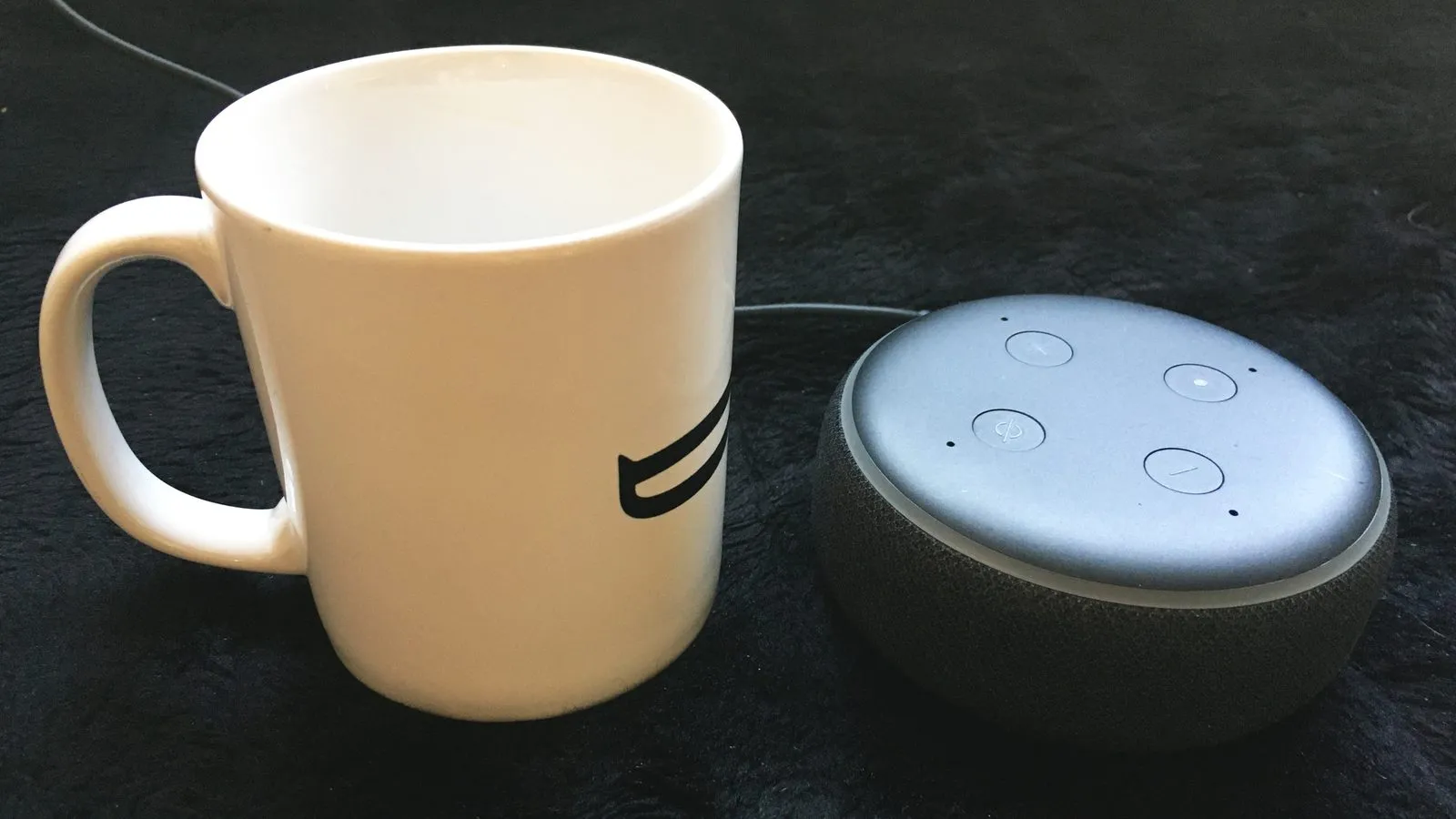
There is a confusion Amazon does nothing to clear up: “Alexa” is not the device, it is the assistant. It runs in the cloud and it is identical on the cheapest Echo Pop and the priciest Echo Studio. No model answers better, knows more, or understands more commands than another. That changes the question worth asking in a store, which is not “which Alexa is best” but “what hardware do I need around her”.
The three things that actually change
Sound. The Echo Pop fires forward, which is why it was designed to sit against a wall or in a corner. The Echo Dot is spherical and throws sound sideways, so it works better in the middle of a room. Above both, the Echo Dot Max is the first in the line with a separate woofer and tweeter, and that is where the audio jump genuinely happens.
Screen. Echo Pop and Echo Dot are voice only. Seeing anything means an Echo Show (5, 8, 11 or 15 inches) or an Echo Spot, the halfway option with a small clock-style display. The screen stops being a luxury the day you install a doorbell camera: without one, “Alexa, show the front door” has nowhere to land.
Sensors and hub. This is the difference almost nobody checks on the shelf. The Echo Dot has a temperature sensor and motion detection; the Echo Pop has neither. That decides whether you can build a routine like “if it goes past 82 degrees, turn on the fan” without buying a separate sensor. And only the Echo Dot Max carries a built-in smart home hub that speaks Zigbee and Thread on top of Matter: on every other model, each Zigbee bulb still needs its own bridge.
Where the money actually goes
List prices in this line are close to fiction, because the Echo Dot and the Echo Show 5 spend a large part of the year discounted well below sticker. That matters for one specific decision: outside a sale the Echo Pop is the cheapest way in, but during a sale the Dot routinely lands near Pop money, and the order flips. When that happens, buying the Pop only makes sense for physical space, not for price.
Alexa+, the generative AI version of the assistant, is not a reason to pick one model over another either. Compatibility covers essentially the whole current line, Echo Pop included. It is free with a Prime membership and $19.99 a month standalone, and the newest hardware (Echo Show 8, Echo Show 11, Echo Dot Max, Echo Studio) shipped with chips tuned for it rather than unlocking features the others cannot get.
What buyers complain about
On the Echo Pop, the recurring complaint is not volume, it is bass and distortion once you push past roughly 70%. People who put both on a table tend to say raw quality is close to the Dot, and that the real separator is where the sound points.
On the Echo Dot, the most common regret is expectation-shaped: it gets bought as a speaker replacement and it is not one. As a voice endpoint with sensors attached, the same owners are generally happy.
On the Echo Show 5, the complaint that generates the most returns is streaming. App support is narrower than the “smart display” label suggests, and there are also repeated reports of voice pickup that lags an Echo Dot sitting in the same room.
Quick comparison
| Model | Screen | Sensors and hub | Price range |
|---|---|---|---|
| Echo Pop | None | None | $30 – $45 |
| Echo Dot | None | Temperature and motion | $50 – $80 |
| Echo Dot Max | None | Zigbee, Thread and Matter hub | $100 – $140 |
| Echo Spot | Small display | None | $60 – $90 |
| Echo Show 5 | 5.5 inches | 2 MP camera | $70 – $100 |
| Echo Show 8 | 8.7 inches | Camera and advanced sensors | $150 – $200 |
How to decide in one sentence
If this is your first Alexa and the job is voice commands, alarms and a smart bulb, a discounted Echo Dot covers it with room to spare. If the plan is real automation with Zigbee bulbs and sensors, the hub inside the Dot Max saves you buying a bridge later. If you want to see the doorbell, the recipe or the forecast, you need a screen, and the Echo Show 5 is the cheapest way in as long as you check which streaming apps it supports first.
One warning for anyone buying with sound in mind: no small Echo replaces a dedicated speaker, and that is the most common regret in the whole line. If music is the real reason for the purchase, compare against portable Bluetooth speakers first, because they deliver more volume and more bass for the same money. And if the device is headed for a nightstand, the Echo Show 5 will fight for the same outlet as the wireless charger already there, so plan the power strip before you pick the model.
Our recommendations
Echo Pop
The cheapest Alexa in the line, with a front-firing speaker: it was designed to sit against a wall.
Pros
- Half-dome shape fits a narrow shelf or a crowded nightstand
- Front-firing driver actually helps in a small room or a corner
- Runs the same Alexa and supports Alexa+, exactly like the expensive models
Cons
- It is the weakest audio in the line, and owners repeatedly mention thin bass and distortion past roughly 70% volume
- No temperature sensor and no presence detection, so automations like 'turn on the fan when it gets warm' are off the table
- The Echo Dot drops close to Pop money often enough that the price gap frequently disappears
$30 – $45
Check price on AmazonEcho Dot
The middle of the line and the model Amazon discounts hardest: omnidirectional sound plus the sensors the Pop skips.
Pros
- 1.73-inch driver in a spherical shell that throws sound sideways instead of forward
- Built-in temperature sensor and motion detection open up routines without buying separate sensors
- Matter support and Fire TV pairing, and it is the model that shows up in aggressive sales most often
Cons
- Buyers who expect it to replace a real speaker tend to be disappointed, and that comparison shows up constantly in reviews
- No Zigbee radio inside, so Zigbee bulbs and sensors still need their own hub
- The clock version costs meaningfully more for what is a small LED display
$50 – $80
Check price on AmazonEcho Show 5
The 5.5-inch Alexa built for a nightstand: time, doorbell camera feed and recipes on screen.
Pros
- A screen solves what voice cannot: seeing who rang the doorbell, following a recipe, glancing at the forecast
- Amazon rates the bass at twice the previous generation, and it is the cheapest Echo with a display
- 2 MP camera handles video calls and doubles as a rough baby monitor
Cons
- Streaming support is narrower than people assume, and the missing app is the complaint that comes up most from buyers who treated it as a tiny TV
- Owners report voice pickup that is worse than an Echo Dot in the same room, especially from across the space
- Reports of sluggish interface next to an Echo Dot in the same house also show up regularly
$70 – $100
Check price on AmazonPrices are reference ranges and change often, so check the current price on Amazon before buying.
Frequently asked questions
Do all Echo devices run the same Alexa?
They do. Alexa is software and it runs in the cloud, so a $30 Echo Pop answers the same questions and runs the same routines as an Echo Studio. What the price buys is hardware: speaker, screen, camera, sensors and smart home hub. The one software split today is Alexa+, which needs a second-generation device or newer.
Do I need a new Echo to get Alexa+?
Usually not. Amazon lists the Echo Dot and Echo Dot Max, the standard Echo, the Echo Pop, the Echo Studio and the Echo Show 5, 8, 10, 11 and 15 as compatible from the second generation on. The first-generation Echo Dot, Echo, Echo Plus, Echo Show and Echo Spot are the ones left out. Alexa+ is included with Prime and costs $19.99 a month on its own.
Which Echo is best for music?
None of these three, if music is the actual reason for the purchase. Inside the line the real step up is the Echo Dot Max, with a separate woofer and tweeter, and then the Echo Studio. Below those, the gap between Pop and Dot is more about direction than quality: the Pop pushes sound forward, the Dot spreads it. For anything party-sized or portable, a dedicated Bluetooth speaker gives you more for the same money.
Read next
Smart home
Smart bulbs: Wi-Fi or Zigbee, which should you buy?
Peripherals
Does a vertical mouse fix wrist pain?
Peripherals