Can You Bring a Power Bank on a Plane? The 2026 Rules
Updated on August 12, 2026
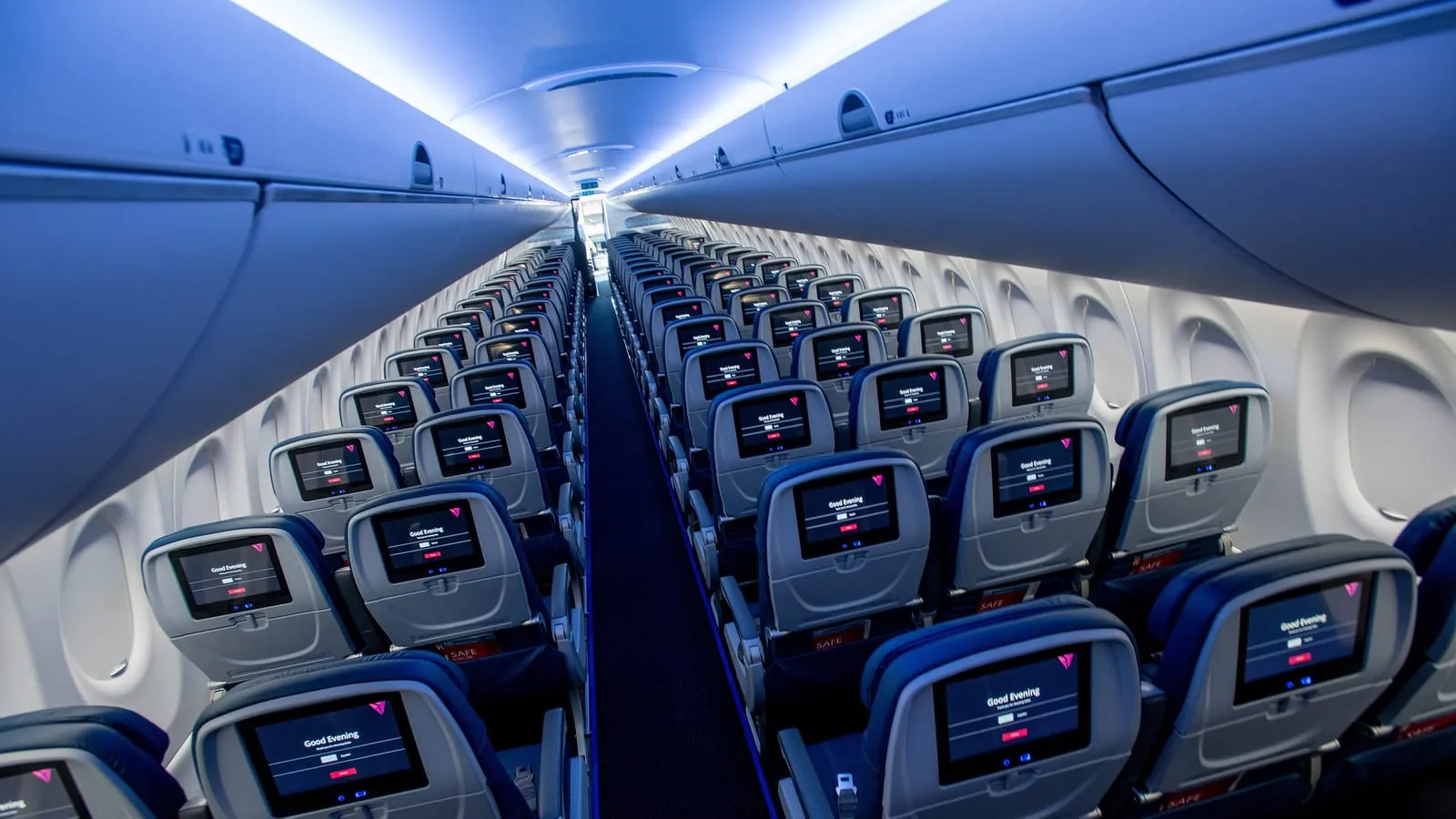
Power banks did not get banned. They got fenced in. The federal rules in the US have not really moved in years, but individual airlines spent 2025 and 2026 writing their own policies on top of them, and those policies are not identical. That is the part that catches travelers off guard: you can pass security with no trouble and still be told to put the thing away once you sit down.
The federal baseline
- Carry-on only. Spare lithium batteries, which includes every power bank, cannot go in checked luggage. This is the oldest rule here and the one most likely to cost you the device.
- Under 100 Wh, no approval needed. Between 101 Wh and 160 Wh you need airline approval, and you are capped at two spares. Above 160 Wh it does not fly at all.
- Protect the terminals. Original packaging, a pouch, or tape over the ports. Loose in a bag with keys is how a cell shorts.
- The rating has to be readable. If the label wore off, screening cannot verify it, and the easy call is to take it.
What the airlines added on top
This is where it stopped being uniform. Southwest went first in May 2025, requiring the power bank to stay visible while it is charging something, not buried in a bag. Other carriers followed with rules of their own: keeping loose batteries out of the overhead bin, banning recharging the pack from a seat outlet, or both.
The distinction most policies draw is worth understanding, because it is not arbitrary. Using a power bank to charge your phone is one thing. Recharging the power bank itself is another, and it is the one that gets restricted, because pushing current into a lithium cell is when it runs hottest and when a bad cell is likeliest to fail. Outside the US the rules go further still, and a number of Asian and Middle Eastern airlines now ban switching one on at all during the flight.
Check your specific airline before you leave. It takes a minute and it is the only way to know.
mAh is not Wh, and the rule is in Wh
The box advertises mAh. The rule is written in watt-hours. The conversion is one multiplication:
Wh = (mAh ÷ 1000) × 3.7
3.7 V is the nominal voltage of the lithium cells used in essentially every consumer power bank. So:
| Capacity | Approximate energy | Status |
|---|---|---|
| 5,000 mAh | 18.5 Wh | fine |
| 10,000 mAh | 37 Wh | fine |
| 20,000 mAh | 74 Wh | fine |
| 25,000 mAh | 92 Wh | fine, near the ceiling |
| 27,000 mAh | 100 Wh | right at the line |
| 50,000 mAh | 185 Wh | not allowed |
Practically everything sold as a pocket power bank clears this easily. The packs that get stopped are camping batteries, portable power stations and those 50,000 mAh bricks bought for road trips.
What to buy, or just check before you go
If your current power bank is under 100 Wh and the rating is still legible, you do not need to buy anything. The picks below are for replacing one whose label has worn off, or for buying with travel in mind from the start.
Prices move constantly with sales. Check the current price before buying.
Quick comparison
| Model | Energy | Best for | Price range |
|---|---|---|---|
| Anker Nano 10,000 mAh | 37 Wh | Most trips, daily carry | $40 – $60 |
| Anker Laptop 25,000 mAh | 90 Wh | Working on long-haul flights | $110 – $160 |
| Anker Nano magnetic 5,000 mAh | 18.5 Wh | Minimum weight in the bag | $40 – $60 |
For most trips the 10,000 mAh Nano is the answer: plenty for an airport day, a huge margin under the limit, and no extra cable to remember. The thing to watch with this one is not the TSA rule but longevity: enough owners past the one-year mark report the built-in USB-C connector loosening or failing that it shows up as a recurring theme rather than a one-off, described more than once as a “known issue” with the cable-built-in Nano line. Anker replaces it under warranty, but it is worth knowing before you count on it for a long trip.
The 25,000 mAh pack only earns its weight if you genuinely work on long flights, and there are two things the spec sheet does not tell you: it sits a few watt-hours from the approval range, and travelers who carried it slung from its own retractable cable report the connector working loose over a longer walk, so the included pouch is the safer way to carry it than hanging it by the cable. Owners are also consistent on one point: it lives in a backpack, not a pocket, at over a pound and about the size of a soda can.
The magnetic 5,000 mAh is for people who want a little insurance and nothing else in the bag. A common worry with cheap magnetic chargers is whether the magnet actually holds the weight of the brick hanging off the phone; on this specific model, reviewers who tested the grip under load report it does not pull loose, which is the detail that separates it from the generic Qi2 packs that do.
Two nearby decisions change what is worth packing. If your problem is not boarding rules but speed and capacity day to day, the numbers that matter are different, and they are in our fast-charging power bank guide. And since topping the pack back up in the air is the thing airlines restrict, refilling everything at the hotel or during a layover matters more than it used to, which is the case for carrying one multi-port GaN charger instead of three separate bricks.
Our recommendations
Anker Nano Power Bank (10,000 mAh, 30W)
37 Wh, fits in a seat pocket, and the USB-C cable comes out of the body: the least annoying shape to fly with.
Pros
- 37 Wh leaves an enormous margin under the 100 Wh line
- Built-in cable, so there is nothing loose to dig for during a connection
- Watt-hour rating printed on the case, which is what a gate agent actually asks to see
Cons
- 10,000 mAh is one to two phone charges, and a full travel day eats that
- A recurring complaint from owners past the one-year mark is the built-in USB-C connector loosening or dropping the charge; Anker typically replaces it under warranty, but it is the most cited weak point of this cable-built-in line
- Not enough output to charge a laptop at a useful speed
$40 – $60
Check price on AmazonAnker Laptop Power Bank (25,000 mAh, 165W)
Rated 90 Wh, which is nearly the ceiling you can board without approval, and the only one here that charges a laptop.
Pros
- Three USB-C ports charge a laptop, a phone and earbuds at the same time
- Retractable cables built in, and one of them doubles as a carry strap
- Anker prints the 90 Wh rating and the flight note right on the case
Cons
- Over a pound, and owners consistently describe it as a backpack item, not something you carry on your body all day
- At 90 Wh there is little headroom: a slightly larger pack lands in the approval range
- Some travelers who carried it slung by the built-in cable-strap report the connector working loose on a long walk
$110 – $160
Check price on AmazonAnker Nano Magnetic Power Bank (5,000 mAh, Qi2)
18.5 Wh and about as thick as a credit card: it sticks to the phone and disappears into a personal item.
Pros
- Magnetic grip strong enough that it does not pull loose on its own, which reviewers note compares well against cheaper Qi2 competitors
- So far below 100 Wh that the rule never comes up
- Light enough to live in a jacket pocket all day
Cons
- 5,000 mAh is less than one full iPhone charge
- Wireless charging runs hot and wastes energy, which is worse in a warm cabin
- Worst price per watt-hour of the three
$40 – $60
Check price on AmazonPrices are reference ranges and change often, so check the current price on Amazon before buying.
Frequently asked questions
Can a power bank go in a checked bag?
No. Spare lithium batteries, including every power bank, are banned from checked luggage. The reasoning is practical: a cell that vents in the cabin gets handled by the crew in seconds, while the same event in the cargo hold happens where nobody can see it. Bags found with one are usually opened and the battery pulled.
How do I find the watt-hour rating on my power bank?
It is normally printed on the case near the serial number. If you only see mAh, divide by 1,000 and multiply by 3.7, the nominal voltage of a lithium cell: 20,000 mAh works out to about 74 Wh. If the label has worn off, the math stops mattering, because screening has to be able to read the number on the device itself.
Can I use a power bank during the flight?
It depends on the airline, and that is the part people get wrong. Recharging the power bank itself from a seat outlet is where most carriers draw the line, since charging into a battery is when it runs hottest. Using it to top up a phone is usually allowed in the US, but several Asian and Middle Eastern carriers now ban in-flight use entirely.
How many power banks can I bring?
The federal rules cap spare batteries in the 101 to 160 Wh range at two, and do not set a hard number below 100 Wh, but airlines do. Southwest allows one; several other carriers cap it at two. Assume two and check your airline.